Deciding whether to rent or buy a home is one of the biggest financial and lifestyle decisions many people make. In Columbia, SC, the choice isn’t always obvious — it depends heavily on your goals, finances, and the local market dynamics. This post will walk through the pros and cons of renting and buying in Columbia, highlight key local metrics, and help you decide what’s right for your situation — whether you are a buyer, seller, or investor.
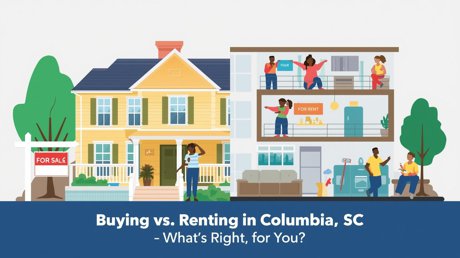
Local Market Snapshot: Columbia, SC in 2025
Before diving into rent vs. buy, let’s get a clear picture of Columbia’s housing landscape today.
- The typical home value in Columbia is around $232,153, up ~2.9% over the past year.
- The median listing price is about $259,900 (listing price), with median sold prices around $251,200.
- In the rental market, the median rent in Columbia sits around $1,550 (all property types) as of mid‑2025.
- Rents have increased modestly year-over-year (~5%) but are flat month-over-month.
- The cost of living in Columbia is lower than the U.S. average. Housing (whether renting or buying) is estimated to be ~31% below the U.S. average.
These numbers suggest Columbia remains relatively affordable compared to many U.S. metros — and that both buying and renting have viable appeal here.
Renting in Columbia: Pros, Cons & When It Makes Sense
Pros of Renting
1. Flexibility & mobility
If your job is not permanent, you may expect relocation, or your life situation is in flux, renting allows you to move without the burden of selling a home.
2. Lower upfront costs
Renters generally pay a security deposit and the first month’s rent, but avoid large down payments, closing costs, and many of the upfront fees associated with buying.
3. Maintenance & repair responsibility mostly falls to the landlord
Plumbing, HVAC, roof issues — unless the lease says otherwise — are typically the landlord’s burden.
4. Predictable monthly cost (in many cases)
While rent may rise over time, many leases lock your rent for 12 months, giving you some budgeting certainty.
Cons / Risks of Renting
1. No equity building
Your monthly rent payments do not build ownership or long-term wealth.
2. Rent increases
Landlords may raise rent when leases renew, or your property may be sold or converted, forcing you to move.
3. Limited control over renovations / customization
You’ll want permission for upgrades or changes; you may not be able to do what you like with the space.
4. Less stability & permanence
Leases expire; landlords may choose not to renew. In a tight market, good rentals can be in high demand.
When Renting Is Smart in Columbia
- You plan to stay in the area for less than 3–5 years.
- You don’t have enough capital for a down payment or aren’t yet in a strong financial position (e.g. high debt, poor credit).
- You value flexibility more than homeownership.
- You expect market conditions are unfavorable for buyers (e.g. high interest rates, low inventory).
Buying in Columbia: Pros, Cons & When It Makes Sense
Pros of Buying
1. Equity growth & wealth building
When you pay your mortgage, part of each payment contributes to your ownership stake.
2. Tax advantages
Mortgage interest and property taxes may be deductible (depending on your tax bracket and changes in legislation).
3. Long‑term cost control
With a fixed-rate mortgage, your principal + interest payments are locked for the term (e.g. 15 or 30 years), insulating you from rent inflation.
4. Freedom to customize and improve
You can make renovations, upgrades, and improvements that may increase the property’s value.
5. Potential for appreciation
Over time, real estate values tend to rise (though not guaranteed), which can amplify your investment if you hold long enough.
Cons / Risks of Buying
1. High up-front costs
You’ll need a down payment (often 5–20%), closing costs, inspection fees, and possibly moving/renovation expenses.
2. Ongoing maintenance & repair responsibilities
Roof, HVAC, plumbing, landscaping — you’ll pay for these, and they can be unpredictable.
3. Transaction costs & time
Buying and selling inherently carry transaction costs (agent fees, title, escrow, taxes) and take time.
4. Market risk & illiquidity
Home values can stagnate or fall. Real estate is not as liquid as stocks — selling can take months.
5. Opportunity cost of capital
Money tied up in home equity could potentially be invested elsewhere (stocks, business, etc.).
When Buying Makes Sense in Columbia
- You expect to live in the home for 5+ years (so the upfront costs and market volatility even out).
- You are financially ready: low-to-moderate debt, strong credit, stable income, and enough savings for the down payment + reserves.
- You are comfortable taking on maintenance and upkeep tasks.
- You are focused on long-term wealth accumulation over immediate flexibility.
To decide quantitatively, many real estate advisors use a rent vs. buy break-even horizon: how many years you need to stay in a home for buying to “catch up” to renting, considering equity, tax savings, maintenance, and opportunity cost.
In a rising-value market (as Columbia has seen), that break-even period may shrink — but in uncertain times, it can extend.
Investor & Seller Considerations in Columbia
For Investors
- Cash flow & cap rate
If you plan to buy rental property, analyze projected rent minus expenses (taxes, insurance, maintenance, property management, vacancy). Some investors note that in Columbia, getting a “1% rule” (rent = ~1% of purchase price) is challenging; expectations may need to be more conservative (e.g. 2% rule, or higher upfront discounts) to make deal math work.
- Regulations & taxes
Be aware of local Columbia/City zoning, rental registration, short-term rental restrictions, and property tax rates. Some threads suggest Columbia has been tightening some landlord / small-scale landlord requirements.
- Appreciation potential
Columbia’s moderate growth in values suggests upside, though returns are rarely spectacular short-term.
- Demand drivers
The presence of the University of South Carolina, medical centers, Fort Jackson, and steady in-migration to the Midlands region all support rental demand.
For Sellers / Existing Homeowners
- Leverage market conditions
With inventory levels rising in some months (e.g. 2.6–2.7 months of supply) , it’s important to price competitively and market strongly.
- Use rent vs. buy content as a lead magnet
Buyers comparing rent vs. buy are ideal clients — your content (this blog) can funnel them into your buyer service pipeline.
- Timing matters
If interest rates are favorable and buyer demand strong, moving sooner rather than later may yield better net proceeds.
How to Decide: Questions to Ask Yourself (or Your Clients)
1. How long do I plan to stay in this property?
If under 3 years, renting often wins. Over 5–7 years, buying typically becomes more favorable.
2. Can I afford the upfront costs and ongoing maintenance?
Down payment, closing, utilities, insurance, repairs — run a “worst case” budget scenario.
3. What is my risk tolerance?
If you dislike uncertainty, renting may feel safer. If you're comfortable riding over the ups and downs, buying may pay off.
4. How stable is my income / job situation?
If your job or income is volatile, owning can strain your finances more.
5. What is my long-term financial goal?
Do you want to build equity and wealth, or preserve liquidity and flexibility?
6. How is the local market trending?
In a rising market (like parts of Columbia), buying may lock in potential gains. In a cooling or overpriced market, renting may shield you from downside.
7. Are there good rental opportunities if I own?
If buying a property, you might rent later (e.g. job relocation), verify rental demand, local rent levels, and regulations.
Final Thoughts & Recommendations
- There is no one-size-fits-all answer. Whether renting or buying makes more sense depends on individual financials, time horizon, and risk tolerance.
- In Columbia’s current market, rental and ownership costs can be competitive — making the decision more nuanced than in hyper-priced metros.
- For many people who plan to stay in a location 5 years or more and have stable finances, buying tends to come out ahead. But for those needing flexibility or testing a new area, renting is a perfectly valid strategy.