Columbia Real Estate News

This section is a mixture of our newest listings, and some of the testimonials and accolades that our agents have received from happy clients. If you see a home that looks interesting, call or contact us today.  


Dec. 11, 2025

Top Mistakes to Avoid When Selling a Home in South Carolina

Selling a home in South Carolina — whether in Charleston’s historic districts, Myrtle Beach’s coastal communities, Greenville’s thriving suburbs, or Columbia’s central neighborhoods — can be both rewarding and challenging. With a median home price of around $300,000 statewide in 2025, market activity varies by region and buyer demand remains strong in many areas, even amidst shifting interest rates and inventory levels.

To maximize your sale price, reduce stress, and attract serious buyers quickly, it’s essential to avoid common missteps that can slow down — or even derail — your home sale. Here’s a comprehensive look at the top mistakes South Carolina sellers should steer clear of in 2025 and beyond.

1. Overpricing Your Home

One of the most frequent and costly mistakes sellers make is setting the asking price too high. Homes priced above market value often sit on the market for longer, leading buyers to wonder what’s “wrong” with the property — and eventually forcing price cuts.

Avoid This: Work with a local agent to prepare a Comparative Market Analysis (CMA). This ensures your asking price reflects nearby sales, current demand, and local trends specific to South Carolina neighborhoods.

2. Neglecting Necessary Repairs and Maintenance

Buyers in the SC market — particularly in established communities — are looking for move-in ready options. Ignoring obvious repairs like leaky faucets, cracked tiles, or roof issues creates buyer hesitation and gives negotiating leverage to reduce your sale price.

Pro Tip: Consider a pre-listing inspection. Addressing issues upfront builds buyer confidence and streamlines closing.

3. Skipping Home Preparation and Staging

In today’s market, first impressions matter. Homes that look dated, cluttered, or overly personalized can be harder to sell quickly — and for top dollar.

Common staging mistakes include:

  • Leaving excessive clutter or personal photos
  • Skipping minor cosmetic fixes
  • Neglecting exterior appearance

Solution:

  • Declutter and depersonalize interior spaces
  • Use neutral colors and finishes to appeal to a broader audience
  • Invest in professional staging if possible
  • A well-presented home often stands out online and during showings, which can lead to more offers.

4. Poor Photography and Weak Online Presence

Most buyers in South Carolina begin their home search online. Listings with poor quality photos or limited visuals get fewer clicks — and fewer showings.

Avoid This Mistake:

  • Hire a professional real estate photographer
  • Include high-quality images of key rooms, exterior shots, and property highlights
  • Consider video or virtual tours to reach out-of-state buyers

5. Neglecting Curb Appeal

First impressions start at the curb. Overgrown lawns, chipped paint, or an unkempt exterior can turn away buyers before they ever step inside.

Boost Appeal With:

  • Fresh landscaping and lawn care
  • A clean driveway and entryway
  • Updated outdoor lighting and house numbers
  • Even modest improvements can make a huge difference in buyer perception.

6. Being Inflexible with Showings

Restricting showing times — even for understandable reasons — can significantly reduce buyer traffic. The easier it is to view your home, the more potential offers you can generate.

Be Flexible:

  • Offer evening and weekend showings
  • Keep the home in show-ready condition
  • Consider lockboxes or agent-managed schedules

7. Going It Alone Without Professional Support

Trying to sell For Sale by Owner (FSBO) may seem appealing to save on commissions, but many sellers underestimate the expertise, marketing power, and negotiation skill a trusted agent brings.

Partner with a Local Expert:

Choose an agent who knows your South Carolina market — from Hilton Head to Spartanburg — and has a track record of strong sales and happy clients.

8. Letting Emotions Cloud Decisions

Selling a home is emotional — especially when you’ve lived in it for years. However, treating the sale like a business transaction and focusing on market realities rather than sentiment can bring better results.

Stay Objective:

  • Base decisions on data and feedback
  • Be open to adjusting price or terms
  • Trust your agent’s guidance through negotiations

9. Failing to Disclose Issues Transparently

South Carolina law requires sellers to disclose known property defects. Trying to hide problems can lead to legal trouble, unhappy buyers, or last-minute renegotiations.

Be Transparent:

  • Provide disclosures upfront
  • Offer repair credits when appropriate
  • Show good faith to build trust

10. Ignoring Timing and Market Conditions

While SC’s overall housing market remains active, the best timing for listing can vary by season and region. Working with your agent to strategically time your sale — whether in spring demand peaks or other favorable windows — can impact buyer interest and sale price.

Final Thoughts

Selling your South Carolina home doesn’t have to be stressful or uncertain. By avoiding these common mistakes and partnering with experienced professionals, you can attract more buyers, reduce time on market, and maximize your return. Whether you’re in Charleston, Columbia, Greenville, or anywhere in between, the right strategy makes all the difference.


Posted in For Sellers
Nov. 18, 2025

How the University of South Carolina Shapes Columbia’s Housing Market

Columbia, South Carolina, is more than just the state capital — it's home to the University of South Carolina (USC), a major economic and demographic engine. Whether you're a buyer, seller, or investor, understanding how USC influences housing in Columbia is critical. The university’s growth affects rental demand, neighborhood dynamics, and long-term real estate trends. In this post, we'll explore how USC’s presence drives Columbia’s housing market — and what that means for you.

1. USC Drives Strong and Predictable Rental Demand

High student population = consistent renters.

With a student body of over 36,000, USC brings a constant pool of rental demand to Columbia. Of those, a significant portion live off campus, putting pressure on nearby residential neighborhoods. The result? Neighborhoods around the campus are in high demand, especially for smaller multi-bedroom homes suited for student rentals.

Rising rents reflect tight supply.

Despite a boom in student-targeted construction, rents remain high. Average off-campus rent for a USC student is about $1,100 per person per month, according to Homes. Four-bedroom apartments in new complexes like Verve (opening Fall 2026) start at around $1,275 per person. Colliers’ reports show that occupancy rates in student housing are very high (around 94–97%), meaning most beds are filled.

2. Strong Investor Appeal & Multifamily Development

Investors love student housing.

Because USC students are reliable tenants and demand remains steady, developers and investors are increasingly focused on multifamily and student housing projects. Recent reports note a surge in downtown and near-campus apartment construction — some of it student-specific, some market-rate.

A notable example: a mixed-use development is being proposed for downtown Columbia including both general market units and student housing, a $225 million project with a 27-story tower.

Redevelopment opportunities.

Demand is so strong, developers are converting existing buildings. A recent $25 million deal turned a downtown office tower into 200 apartments specifically targeting USC students. For real estate investors, this kind of adaptive reuse can offer good long-term returns, especially in areas close to campus and public transit.

3. Neighborhood Transformations & Tensions

“Studentification” and displacement concerns.

As more students move off campus, residential areas around USC are changing. Longtime residents in historic neighborhoods like Wales Garden, Wheeler Hill, and Hollywood-Rose Hill have expressed concerns that student rentals are crowding out families. In fact, local leaders estimate that for every 1,000 additional students, about 30 homes may get converted into student rentals.

Regulatory pushback is real.

Columbia has zoning rules limiting the number of unrelated people in a house — a three-tenant cap per home was upheld in court. But enforcement is uneven, and neighborhood leaders argue it’s not enough to protect long-term residents.

City accountability for landlords.

To address code violations and disorder, Columbia implemented a “points” system for rental properties. Landlords accumulate points for violations (like mold or safety issues), and too many points can lead to fines or even loss of their rental permit. This keeps landlords more accountable, especially in high-tenant, high-turnover student housing.

4. Economic Impact Beyond Housing

USC contributes billions to the Midlands economy.

USC is not just a campus — it's an economic anchor. A recent study estimated the university produces about $4.2 billion in economic activity annually in the Midlands region. That impacts jobs, retail demand, and real estate development beyond just student housing.

Graduate retention fuels long-term stability.

Interestingly, USC retains a notable portion of its graduates in the Columbia area. Around 40.7% of graduates stay in the region within five years, according to one report. These young professionals often transition into the local housing market as either renters or first-time buyers, helping sustain demand.

5. Implications for Home Buyers, Sellers & Investors

For Home Buyers:

  • If you're buying in neighborhoods near USC, be prepared: strong demand from students may drive up prices.
  • On the flip side, this demand can support appreciation, especially if zoning remains favorable to multifamily conversions.
  • Be mindful of whether a home is likely to attract student renters — that affects long-term use, noise, traffic, and resale.

For Home Sellers:

  • Properties near USC can be very attractive to investors or parents buying for their students.
  • If your home is in a walkable, in-demand area, marketing to student buyers or landlords can be lucrative.
  • On the other hand, if longtime residents feel neighborhood character is eroding, community sentiment may affect market perception.

For Investors:

  • Student housing remains a compelling niche: predictable demand, relatively stable occupancy, and growth potential.
  • Conversions (like office-to-apartment) are an attractive play.
  • Monitor new construction: while apartments are booming, if supply overshoots demand, returns may compress. Colliers reports show strong absorption now, but investors should stay vigilant.
  • Also consider mixed-use or market-rate multi-family: there is demand both from students and young professionals.

Conclusion: USC Is More Than a Neighbor — It’s a Market Driver

The University of South Carolina is deeply woven into the fabric of Columbia’s housing market. Its growing student population fuels rental demand spurs multifamily development and even reshapes longtime neighborhoods. For buyers, sellers, and investors, USC is not just an educational institution — it's a powerful real estate force.

Posted in For Buyers, For Sellers
Nov. 6, 2025

Understanding the Closing Process in Columbia, SC

Introduction

Whether you’re buying your first home, selling an investment property, or repositioning your real-estate portfolio in the Columbia, SC area, the closing process is a pivotal milestone. Yet it’s often one of the most misunderstood parts of a real-estate transaction. In this blog post, we’ll walk you through the closing process in South Carolina—with an emphasis on the Columbia market—so you know what to expect, how to prepare, and how to avoid common pitfalls.

Why the Closing Matters

“Closing” refers to the moment when legal ownership transfers from seller to buyer, funds are exchanged, documents are signed and recorded, and everyone walks away with what they expect. For home buyers, it’s the point when you finally get the keys and become owner. For sellers, it’s when you receive proceeds and hand over the property. For investors, it’s the moment your strategy either locks in or shifts based on final numbers, timing and property condition.

In the Columbia market, being prepared for closing helps minimize stress, avoids delays, and protects your financial investment and legal interests.

Key Steps in the Closing Process in Columbia, SC

Here’s a step-by-step breakdown of what typically happens in Columbia and South Carolina, and what each party (buyer, seller, investor) should know.

1. Contract Execution & Due Diligence

Once a purchase agreement is signed, the buyer enters the due diligence period (for inspections, appraisal, etc.).

  • In South Carolina, home and pest inspections are critical: while a full inspection may not be mandated by law, pest inspections (especially for wood‐destroying organisms) are common.
  • The buyer’s lender orders an appraisal, and the closing attorney begins a title search.
  • Tip: Buyers and investors should schedule inspections and keep an eye on appraisals early to avoid delays; sellers should be ready to provide access and documentation.

2. Title Search, Attorney Review & Clearances

  • South Carolina is an attorney‐state, meaning that a licensed real-estate attorney must handle/oversee the closing.
  • The attorney reviews title for liens, judgments, unpaid taxes, and other encumbrances. If issues are found, they must be “cleared” before closing—this is often where delays occur.
  • For sellers (especially investors), resolving title or ownership issues ahead of time is smart: it helps ensure closing goes smoothly.

3. Final Walk-Through and Pre-Closing Preparations

  • Buyers typically have a final walk-through a day or two before or the day of closing to ensure the property is in the condition agreed upon and any negotiated repairs are complete.
  • Sellers should have utilities scheduled for transfer, keys ready, and any agreed repairs done.
  • Both parties should coordinate with the attorney and closing office to understand what they need to bring (IDs, funds, keys, etc.).

4. Closing Day: Signing & Money Transfer

  • On closing day, documents are signed: deed, settlement/closing statement, loan documents (if buyer is financing), affidavits, insurance documents.
  • Buyers bring funds (in Columbia these are often cashier’s checks or wired funds) to cover down‐payment, closing costs, and any pre-paid items.
  • Sellers bring keys, proof of agreed items, and sign their side of the settlement statements.
  • After signatures, the attorney or closing office records the deed and mortgage in the county recorder’s office, making the new ownership official.
  • Note: The recording of the deed is what legally transfers ownership, and closing cannot fully “settle” until that step is done.

5. Post-Closing: Possession, Recording, and Follow-Up

  • Buyers should change utilities into their name, set up homeowners’ insurance escrow (if applicable), and be prepared to make their first mortgage payment (typically about a month later).
  • Sellers should make sure any proceeds are received, outgoing mortgages are paid off, and they confirm the recording of documents.
  • For investors, this is also the time to begin property management, rental setup, or repositioning strategy.

Costs & Budgeting: What Buyers & Sellers Should Know

Knowing the typical cost structure in Columbia helps avoid surprises.

Closing Costs for Buyers

  • In South Carolina, buyers can expect to pay somewhere in the range of 3% to 5% of the purchase price in closing costs (not including the down‐payment).
  • Typical buyer costs include appraisal fee, title search and insurance, attorney fee, loan origination fees, prepaid interest, property taxes, homeowners insurance, recording fees.
  • Buyers in Columbia: make sure you budget additional funds for these “hidden” items—especially since attorney fees are required.
  • Tip: Ask your closing attorney for a breakdown of costs well ahead of the closing date so you can prepare your cashier’s check or wiring.

Costs for Sellers

  • Sellers in Columbia often cover the real-estate agent commissions (commonly ~6% of sale price) plus prorated property taxes, transfer taxes, title insurance (sometimes), and their attorney fees.
  • In South Carolina the seller’s attorney fees can run several hundred to over $1,000 depending on complexity.
  • Sellers should be ready for settlement statements showing net proceeds after deductions.
  • Tip for sellers: Before you list, estimate your net proceeds by subtracting anticipated closing costs from your expected sale price so you have a realistic target.

Timeline: What to Expect in Columbia

Understanding timing reduces stress. For Columbia and broadly in South Carolina:

  • The average closing timeline is 30‐45 days from contract signing to closing.
  • Delay risks: loan underwriting, appraisal issues, title defects, missing documents, or scheduling snafus can extend closing.
  • Best practice: Start lining up your attorney, lender, and all parties immediately after contract signing; avoid scheduling your closing on the 15th or last day of the month if possible (these days often complicate prorations and lender timelines).

Tips for Buyers, Sellers & Investors in Columbia

Here’s a compilation of practical tips designed specifically for the Columbia area:

For Buyers

  • Confirm at the outset which attorney will handle the closing and what their estimated fees are.
  • Review the closing disclosure early and ask: Who pays what? Are there credits? Are any fees negotiable?
  • Attend your final walk‐through. Ensure the property is in the agreed condition.
  • Bring required identification and funds in the correct form (cashier’s check or wire) as specified by your attorney.

For Sellers

  • Make sure all agreed repairs are completed ahead of closing and provide documentation to your attorney.
  • Schedule utilities to be turned over effectively on the day of possession.
  • Review the settlement statement in advance to understand your net proceeds.
  • Consider pre‐signing some documents if one of the parties cannot attend—but confirm with your attorney this is allowed.

For Investors

  • Pay extra attention to title issues: liens, encumbrances, and previous owner problems can significantly delay your transaction.
  • Determine early whether you’ll hold the property as a rental or flip it—closing delays cost money (holding costs).
  • If you’re switching existing tenants or coming from out-of-town, make sure your attorney and property manager coordinate possession dates and utility transfers.

Common Pitfalls & How to Avoid Them

  • Waiting until last minute for documents: Respond promptly to your lender and attorney’s requests for information.
  • Not budgeting correctly: Unexpected closing cost items (prepaid insurance, HOA dues, recording fees) can sneak up.
  • Title issues discovered late: Start the title search early and discuss potential “curative” issues with your attorney.
  • Scheduling on high‐volume days: Avoid the 15th or last day of the month if possible—they can complicate loan disbursements and settlement statements.
  • Closing before walk-through or repairs completed: Always ensure condition matters are resolved to avoid post‐closing disputes.

Why Working with Local Experts Matters

The Columbia market has its nuances: local county recording practices, Charleston vs Richland/Lexington County utilities, and local attorneys with strong relationships in the area. Using professional's familiar with the Columbia / Midlands region means fewer surprises, smoother closings, and better outcomes whether you’re buying, selling, or investing.

Conclusion

The closing process in Columbia, South Carolina may seem complex—but with the right preparation, it can proceed smoothly and predictably. Whether you’re a buyer ready to take the final step, a seller preparing to hand over the keys, or an investor closing a deal, understanding what to expect—timeline, costs, legal requirements, and document flow—puts you in a position of strength.

If you’d like a tailored closing‐cost estimate for your specific property in the Columbia area, or want introductions to trusted local closing attorneys, just let me know—I’m here to help.

Ready to move forward? Contact us to start the process and we’ll make sure you’re fully prepared for closing day in Columbia.

Posted in For Buyers, For Sellers
Oct. 24, 2025

Smart Home Features That Columbia, SC Buyers Are Looking For

In the Columbia, SC real-estate market — whether you’re a home buyer, seller or investor — staying ahead of what today’s buyer expects is key. Smart-home features are no longer just nice-to-haves: they’re fast becoming important differentiators that can attract more interest, shorten time on market and even boost home value. Below you’ll find what buyers are looking for, why it matters locally, and concrete tips you can use to market or upgrade a property for success.

smart home features

Why Smart Home Features Matter for Buyers & Sellers

Growing demand & wider adoption

  • Nearly half of U.S. households are projected to have smart-home devices by 2027.
  • According to one source, homes with smart systems can sell for 3–5% more compared with non-automated homes.
  • Buyers today expect practical smart features — especially around security, efficiency and connectivity.

What this means in Columbia, SC

Columbia is a growing metro area with new housing developments, strong investment interest, and buyers who are increasingly tech aware. Smart home features can:

  • Help older homes compete with newer construction by adding modern functionality.
  • Appeal to relocation buyers or professionals working remotely who value connectivity and convenience.
  • Provide a marketing angle for sellers and investors: “move-in ready”, “future-proofed”, “lower utility costs” speak to today’s audience.
  • Help stand out in a competitive market: when many listings look similar, tech features can be a differentiator.

Smart Features That Buyers in Columbia Are Looking For

1. Smart Security & Access

One of the top category's buyers look for:

  • Video doorbells, smart locks, remote monitoring and app-based access have become expected in many markets.
  • A sense of safety and control is especially appealing to families, frequent travelers or home offices.

Tip for sellers/investors: Highlight these features in your listing: e.g., “Ring doorbell with live video”, “Keyless smart-lock front entry”. If upgrading, a well-integrated system (rather than a patchwork of devices) goes further.

2. Energy Efficiency & Smart Climate Control

With utility costs rising nationwide and South Carolina’s climate demanding efficient cooling/heating, smart climate systems matter:

  • Buyers are increasingly aware of long-term operating costs; smart thermostats and zoned HVAC are rising in interest.
  • In listings, describing “smart thermostat with zoning” or “energy-monitoring system” can appeal to both buyers and investors focused on long-term return.

Local insight: In Columbia’s hot humid summers, comfort and efficiency are major selling points. Upgrading to a smart thermostat + good insulation or sealing can be marketed as “lower bills and improved comfort”.

3. Seamless Connectivity & Modern Infrastructure

Smart devices only shine if the infrastructure supports them. Buyers now expect more than just a “smart gadget”: they expect a system.

  • Homes that are “smart-home ready” — meaning good Wi-Fi, mesh network, outlets or wiring for automation — score higher in buyer reviews.
  • For sellers/investors: Consider whether your property has reliable internet service, updated wiring, or infrastructure for smart systems. This is especially compelling for younger buyers or remote workers.

4. Wellness & Indoor Environmental Monitoring

An emerging preference: features that support health, comfort and convenience.

  • Monitoring indoor air quality, humidity control, smart water sensors, leak detection — these increasingly appear in buyer wish-lists.
  • For families in Columbia (with seasonal humidity and storms), leak sensors or water-shut-off systems may provide added peace-of-mind.

5. Smart Kitchens & Appliances (Bonus Advantage)

While not always required, smart kitchens can help upgrade a home’s appeal — especially in more competitive or upscale segments.

  • App-controlled ovens, smart refrigerators, lighting scenes in kitchens are becoming more common.
  • For investors: these may increase appeal for higher rental value or quicker lease-up in short-term rental markets around universities or hospitals in Columbia.

smart kitchen

For Sellers & Investors: How to Leverage Smart Features

Audit what you already have

  • Check if smart features exist (security cameras, smart thermostat, smart locks) and confirm they work seamlessly.
  • Make sure any app-based device is reset and ready for transfer (buyers dislike being left with incomplete setups).
  • Document what you have: cost savings, convenience benefits, potentially send utility data if available.

Choose upgrades that give the best return

  • Prioritize smart thermostat + video doorbell + keyless lock — these tend to have broader appeal and lower cost to implement.
  • Ensure WIFI/mesh network is strong (especially if home is older) — poor connectivity can undermine smart-home marketing.
  • Avoid over-customizing with niche expensive gadgets that may not appeal broadly (keeping in mind that usability matters). As one source notes: the ease of use of smart systems is almost as important as the device itself.

Market the features clearly

  • In your listing description: use language such as “smart-home enabled”, “voice-assistant ready”, “remote monitoring security”, “energy-saving thermostat with app control”.
  • Include photos of the smart feature in action (e.g., wall display of thermostat, video doorbell screen).
  • For open houses: demonstrate the smart system to buyers (“you can lock the door from your phone”, “monitor your energy usage”).
  • For investors: highlight the benefit to tenants — “smart lock for keyless entry”, “smart thermostat reduces utility costs”, “ready for streaming & connected devices”.

Consider the value impact

  • While smart upgrades don’t always translate to massive value increases, they can help homes sell faster and, in some cases, command a price premium. For example, one source cites a 3-5% higher sale price for homes with smart systems.
  • For the Columbia market: faster sale and better positioning may matter more than a large premium. A home that looks turn-key and modern in tech may attract more competitive bids in a crowded inventory.

For Buyers: What to Look For & Ask

  • If you’re buying in Columbia (or investing), here are questions you should ask about smart-home features:
  • Which smart devices are included in the home, and are they transferable (apps/accounts reset, all functions working)?
  • Is the home Wi-Fi/mesh network strong enough to support multiple smart devices? Are there areas of weak signal?
  • How intuitive and integrated are the systems? If lights, locks, thermostat are all separate apps and don’t talk, usability declines.
  • What are the monthly costs (if any) for monitoring services (security cameras, subscriptions)? Are there warranties for smart systems?
  • For efficiency: Ask for utility bill comparisons (before/after) if a smart thermostat was recently installed. In Columbia’s climate, savings can accumulate.
  • For resale: Ensure devices are fairly standard and easily user-replaceable (buyers may not want proprietary systems).

Final Thoughts

In today’s market, smart-home features are more than “bells and whistles” — they speak to buyer desires for convenience, security, lower bills and modern living. In Columbia, SC’s real-estate environment, integrating or marketing the right smart features can give your listing a competitive edge — whether you’re selling your home, buying your next property, or positioning an investment.

Whether you’re a seller prepping your listing, an investor evaluating what upgrades to make, or a buyer comparing homes — consider smart-home readiness as a “signal” of a property’s future-readiness and appeal. When done right, this can mean faster sales, easier rentals, and stronger buyer interest.

Posted in For Buyers, For Sellers
Oct. 14, 2025

Where to Find Affordable New Construction Homes Near Columbia, SC

Your guide to locating value and opportunity in the Columbia metro area

If you're looking to purchase a brand‑new home around Columbia, South Carolina—whether as a first-time buyer, investor, or someone relocating—you’ve got several promising submarkets to explore. While the broader Columbia area has seen steady appreciation and active competition, savvy buyers can still find pockets of affordability and builder incentives if they know where to look.

In this post, I’ll walk you through the current market dynamics, what “affordable new construction” realistically means in 2025, and then highlight neighborhoods and corridors around Columbia where the best opportunities are emerging. I’ll also share tips you can use to spot deals and get the inside edge in a competitive environment.

Brand new home in columbia SC

Columbia Area Market Snapshot: Why New Construction Matters Now

Before diving into neighborhoods, it helps to understand the backdrop:

  • Over the past year, 5,819 residential properties have sold in Columbia, with a median home price around $264,400 (ATTOM)
  • Zillow reports an average home value of about $225,993 and notes that new listings are often moving to pending status in ~20 days. 
  • The region is seeing renewed pricing momentum, with some reports of a 7% quarter-over-quarter price surge in Q3 2025 

All of this means that competition is real—and older, move-in‑ready homes are facing stiff bidding pressure. In that environment, new construction offers some advantages:

  • Less deferred maintenance (lower risk of sudden repairs)
  • More modern floorplans, energy efficiency, and builder warranties
  • Opportunities for builder incentives (closing help, upgrades)
  • Ability to lock in today’s prices in fast-appreciating markets

However, “affordable” is relative. In many of Columbia’s new-home listings, you’ll see 3-bedroom homes priced in the $200,000 to $280,000 range (or higher, depending on lot, finishes, and location)

Given rising land and material costs, the real key is finding areas where land is still cheaper, infrastructure is developing, and builders are pushing projects to get started.

Top Areas to Watch for Affordable New Construction

Below are some of the submarkets and development corridors around Columbia where I’m seeing strong value potential:

Let me highlight a few:

  • Pinecrest (West Columbia): A development by Mungo Homes, offering multiple floorplans from about 1,500 to 1,900 sq ft, with base prices in the low $200,000s.
  • Astoria Townhomes (Elgin area): A large-scale townhome community (310 units) aimed explicitly at more affordable new housing, with pricing starting in the high $100,000s. 

These are good examples of the kinds of projects to track. Builders who are launching phases or selling “pre‑sales” (before model homes are complete) often offer better pricing or incentives than when a community is fully built out.

Tips to Spot the Best Deals (And Avoid Pitfalls)

Whether you're a buyer, seller, or investor, here are tactics to help you navigate:

1. Get “on the list” early

Many builders offer VIP lists or presale signups. Those early buyers often get base pricing, lot choice, or incentive packages (e.g. appliance upgrades, closing cost credit).

2. Watch for “late‑release” lots or model home closeouts

As inventory phases age, builders may discount the last few remaining lots or model homes. That’s where negotiation room is more likely.

3. Understand lot premiums and site costs

Sometimes a home will look affordable until you see that a particular lot adds $20,000+ to the price (due to grading, views, utility runs). Always ask: what would the same home cost on a “standard” lot?

4. Compare builder reputations and warranties

Don’t just consider price—check how the builder handles warranty calls, past disputes, finish quality, and timeliness of delivery.

5. Factor in infrastructure and future growth

If you’re buying at the edge of development, consider whether roads, schools, and utilities will keep pace. Sometimes “affordable now” becomes less desirable later if surrounding investment lags.

6. Think medium-term resale or rental potential

For investors especially prioritize areas where demand is growing (job growth corridors, new businesses, transit access) so that appreciation / turnover is stronger.

Why This Matters for Sellers & Investors Too

  • For sellers / developers: Understanding where affordable new construction is in demand can help you identify parcels to acquire or submarkets to phase into.
  • For investors: New construction in growing submarkets often yields lower renovation costs, fewer surprises, and easier turnover.
  • For local real estate professionals: Being the expert on these “emerging corridors” can position you as a go-to agent or broker for buyers who want value and quality.
Posted in For Buyers
Oct. 3, 2025

Pet-Friendly Features That Add Value to Midlands Homes in Columbia, SC

As more Americans consider pets part of the family, the demand for pet-friendly home features is on the rise—especially in pet-loving communities like Columbia and the greater Midlands region. Whether you're a homebuyer looking for a pet-friendly property, a seller hoping to attract more offers, or an investor aiming to boost rental appeal, knowing which pet-friendly features add value to a home is key.

According to a recent report by the National Association of Realtors (NAR), 43% of pet owners would be willing to move to better accommodate their pets, and 68% of pet owners said animal-friendly features influenced their home-buying decisions.

In the Columbia, SC market—where spacious yards, mild weather, and outdoor living are part of the lifestyle—certain features stand out for pet owners. Here's what to consider.

Pet-Friendly Flooring

1. Fenced-In Yards

A securely fenced yard is a top priority for pet owners—especially dog lovers. It offers a safe space for pets to run and play freely, which is a huge selling point in family-friendly Midland's neighborhoods like Lake Carolina, Forest Acres, and Lexington.

Why It Adds Value:

  • Increases usability of the outdoor space
  • Reduces liability concerns for pet owners
  • Boosts curb appeal when well-maintained

Pro Tip for Sellers: Consider upgrading to privacy fencing or adding pet gates as an affordable value-add before listing your home.

2. Durable, Pet-Friendly Flooring

In pet-friendly homes, flooring matters. Buyers are drawn to materials that are scratch-resistant, stain-resistant, and easy to clean—such as luxury vinyl plank (LVP), tile, or sealed concrete.

Why It Adds Value:

  • Enhances longevity and reduces maintenance costs
  • Improves indoor air quality compared to carpet
  • Increases appeal to both pet owners and non-pet owners

Investor Insight: If you're flipping or renovating a rental in Columbia, choosing pet-tolerant flooring can widen your tenant pool.

3. Mudrooms and Pet Washing Stations

A mudroom with a built-in pet washing station is a luxury feature that more buyers are actively seeking, especially in homes near outdoor amenities like the Congaree Riverwalk, Saluda Shoals Park, or Harbison State Forest.

Why It Adds Value:

  • Provides a convenient space to clean up pets before entering the home
  • Keeps dirt and allergens under control
  • Adds functionality that appeals to outdoor enthusiasts

Design Tip: Even a small utility sink or low shower addition in a laundry area can serve this purpose and create a premium impression.

Parks4. Proximity to Parks, Trails, and Pet Services
Location is everything—especially when it comes to access to green spaces and pet-friendly amenities. In Columbia, buyers appreciate proximity to places like:

  • Finlay Park (downtown)
  • Sesquicentennial State Park (northeast)
  • Dog parks in Cayce, Irmo, and Lexington

Why It Adds Value:

  • Improves lifestyle appeal for pet-owning buyers and renters
  • Boosts neighborhood desirability
  • May justify higher asking prices or rent rates

Local Insight: Highlight nearby trails, dog parks, and pet supply stores in your listing description. This localized touch makes your property more relatable.

5. Pet Doors and Smart Features

Modern pet owners love smart tech that makes life easier—like electronic pet doors, automated feeders, or pet monitoring systems.

Why It Adds Value:

  • Enhances home automation appeal
  • Appeals to tech-savvy buyers
  • Adds safety and convenience

Even a simple addition like a custom pet nook under the stairs or in the kitchen can make your listing stand out.

6. HOA and Zoning Pet-Friendliness

Buyers are increasingly asking about HOA pet policies, breed restrictions, and zoning rules that affect pets. Make it easy for them by having this information ready.

Why It Adds Value:

  • Helps buyers make confident decisions
  • Speeds up the sales process
  • Reduces post-sale friction

Investor Alert: If you're buying rental properties in Columbia, aim for pet-welcoming HOAs and communities to maximize your tenant pool and reduce vacancy rates.

The Bottom Line: Pet-Friendly Features Sell

In a market as diverse and growing as Columbia, SC, pet-friendly features are more than just nice-to-haves—they’re deal-makers. Whether you're:

Buying: Look for homes that meet both your needs and your pet’s lifestyle.

Selling: Make small upgrades that attract pet owners (a major share of the market).

Investing: Choose properties and neighborhoods that support pet-friendly living.

By understanding what pet-owning buyers are really looking for, you can position your home—or your investment—for success in the Midlands real estate market.

Ready to Find or Sell a Pet-Friendly Home in Columbia, SC?

As a local real estate expert, I can help you buy, sell, or invest with confidence—whether your house-hunting with a Great Dane or prepping your home to appeal to dog lovers.

📞 Contact me today to start your journey with a professional who understands your needs—and your pets too.

Posted in For Buyers, For Sellers
Sept. 24, 2025

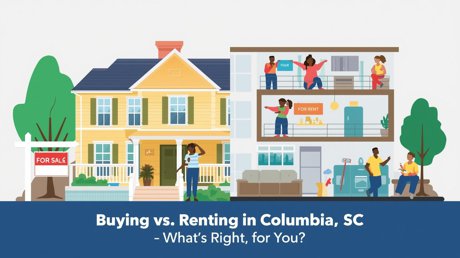
Buying vs. Renting in Columbia, SC — What’s Right for You?

Deciding whether to rent or buy a home is one of the biggest financial and lifestyle decisions many people make. In Columbia, SC, the choice isn’t always obvious — it depends heavily on your goals, finances, and the local market dynamics. This post will walk through the pros and cons of renting and buying in Columbia, highlight key local metrics, and help you decide what’s right for your situation — whether you are a buyer, seller, or investor.

Buying or Renting

Local Market Snapshot: Columbia, SC in 2025

Before diving into rent vs. buy, let’s get a clear picture of Columbia’s housing landscape today.

  • The typical home value in Columbia is around $232,153, up ~2.9% over the past year.
  • The median listing price is about $259,900 (listing price), with median sold prices around $251,200. 
  • In the rental market, the median rent in Columbia sits around $1,550 (all property types) as of mid‑2025. 
  • Rents have increased modestly year-over-year (~5%) but are flat month-over-month. 
  • The cost of living in Columbia is lower than the U.S. average. Housing (whether renting or buying) is estimated to be ~31% below the U.S. average. 

These numbers suggest Columbia remains relatively affordable compared to many U.S. metros — and that both buying and renting have viable appeal here.

Renting in Columbia: Pros, Cons & When It Makes Sense

Pros of Renting

1. Flexibility & mobility

If your job is not permanent, you may expect relocation, or your life situation is in flux, renting allows you to move without the burden of selling a home.

2. Lower upfront costs

Renters generally pay a security deposit and the first month’s rent, but avoid large down payments, closing costs, and many of the upfront fees associated with buying.

3. Maintenance & repair responsibility mostly falls to the landlord

Plumbing, HVAC, roof issues — unless the lease says otherwise — are typically the landlord’s burden.

4. Predictable monthly cost (in many cases)

While rent may rise over time, many leases lock your rent for 12 months, giving you some budgeting certainty.

Cons / Risks of Renting

1. No equity building

Your monthly rent payments do not build ownership or long-term wealth.

2. Rent increases

Landlords may raise rent when leases renew, or your property may be sold or converted, forcing you to move.

3. Limited control over renovations / customization

You’ll want permission for upgrades or changes; you may not be able to do what you like with the space.

4. Less stability & permanence

Leases expire; landlords may choose not to renew. In a tight market, good rentals can be in high demand.

When Renting Is Smart in Columbia

  • You plan to stay in the area for less than 3–5 years.
  • You don’t have enough capital for a down payment or aren’t yet in a strong financial position (e.g. high debt, poor credit).
  • You value flexibility more than homeownership.
  • You expect market conditions are unfavorable for buyers (e.g. high interest rates, low inventory).

Buying in Columbia: Pros, Cons & When It Makes Sense

Pros of Buying

1. Equity growth & wealth building

When you pay your mortgage, part of each payment contributes to your ownership stake.

2. Tax advantages

Mortgage interest and property taxes may be deductible (depending on your tax bracket and changes in legislation).

3. Long‑term cost control

With a fixed-rate mortgage, your principal + interest payments are locked for the term (e.g. 15 or 30 years), insulating you from rent inflation.

4. Freedom to customize and improve

You can make renovations, upgrades, and improvements that may increase the property’s value.

5. Potential for appreciation

Over time, real estate values tend to rise (though not guaranteed), which can amplify your investment if you hold long enough.

Cons / Risks of Buying

1. High up-front costs

You’ll need a down payment (often 5–20%), closing costs, inspection fees, and possibly moving/renovation expenses.

2. Ongoing maintenance & repair responsibilities

Roof, HVAC, plumbing, landscaping — you’ll pay for these, and they can be unpredictable.

3. Transaction costs & time

Buying and selling inherently carry transaction costs (agent fees, title, escrow, taxes) and take time.

4. Market risk & illiquidity

Home values can stagnate or fall. Real estate is not as liquid as stocks — selling can take months.

5. Opportunity cost of capital

Money tied up in home equity could potentially be invested elsewhere (stocks, business, etc.).

When Buying Makes Sense in Columbia

  • You expect to live in the home for 5+ years (so the upfront costs and market volatility even out).
  • You are financially ready: low-to-moderate debt, strong credit, stable income, and enough savings for the down payment + reserves.
  • You are comfortable taking on maintenance and upkeep tasks.
  • You are focused on long-term wealth accumulation over immediate flexibility.

To decide quantitatively, many real estate advisors use a rent vs. buy break-even horizon: how many years you need to stay in a home for buying to “catch up” to renting, considering equity, tax savings, maintenance, and opportunity cost.

In a rising-value market (as Columbia has seen), that break-even period may shrink — but in uncertain times, it can extend.

Investor & Seller Considerations in Columbia

For Investors

  • Cash flow & cap rate

If you plan to buy rental property, analyze projected rent minus expenses (taxes, insurance, maintenance, property management, vacancy). Some investors note that in Columbia, getting a “1% rule” (rent = ~1% of purchase price) is challenging; expectations may need to be more conservative (e.g. 2% rule, or higher upfront discounts) to make deal math work.

  • Regulations & taxes

Be aware of local Columbia/City zoning, rental registration, short-term rental restrictions, and property tax rates. Some threads suggest Columbia has been tightening some landlord / small-scale landlord requirements.

  • Appreciation potential

Columbia’s moderate growth in values suggests upside, though returns are rarely spectacular short-term.

  • Demand drivers

The presence of the University of South Carolina, medical centers, Fort Jackson, and steady in-migration to the Midlands region all support rental demand.

For Sellers / Existing Homeowners

  • Leverage market conditions

With inventory levels rising in some months (e.g. 2.6–2.7 months of supply) , it’s important to price competitively and market strongly.

  • Use rent vs. buy content as a lead magnet

Buyers comparing rent vs. buy are ideal clients — your content (this blog) can funnel them into your buyer service pipeline.

  • Timing matters

If interest rates are favorable and buyer demand strong, moving sooner rather than later may yield better net proceeds.

How to Decide: Questions to Ask Yourself (or Your Clients)

1. How long do I plan to stay in this property?

If under 3 years, renting often wins. Over 5–7 years, buying typically becomes more favorable.

2. Can I afford the upfront costs and ongoing maintenance?

Down payment, closing, utilities, insurance, repairs — run a “worst case” budget scenario.

3. What is my risk tolerance?

If you dislike uncertainty, renting may feel safer. If you're comfortable riding over the ups and downs, buying may pay off.

4. How stable is my income / job situation?

If your job or income is volatile, owning can strain your finances more.

5. What is my long-term financial goal?

Do you want to build equity and wealth, or preserve liquidity and flexibility?

6. How is the local market trending?

In a rising market (like parts of Columbia), buying may lock in potential gains. In a cooling or overpriced market, renting may shield you from downside.

7. Are there good rental opportunities if I own?

If buying a property, you might rent later (e.g. job relocation), verify rental demand, local rent levels, and regulations.

Final Thoughts & Recommendations

  • There is no one-size-fits-all answer. Whether renting or buying makes more sense depends on individual financials, time horizon, and risk tolerance.
  • In Columbia’s current market, rental and ownership costs can be competitive — making the decision more nuanced than in hyper-priced metros.
  • For many people who plan to stay in a location 5 years or more and have stable finances, buying tends to come out ahead. But for those needing flexibility or testing a new area, renting is a perfectly valid strategy.
Sept. 17, 2025

Walkable Neighborhoods in Downtown Columbia, SC: A Guide for Buyers, Sellers & Investors

When it comes to real estate, location is everything—and in Columbia, South Carolina, walkability is becoming a top priority for homebuyers and investors alike. With the rise of urban living preferences, more people are seeking homes in neighborhoods where they can walk to restaurants, shops, parks, and even work.

If you’re looking to buy, sell, or invest in Downtown Columbia, understanding the city’s most walkable areas can give you a major advantage. In this guide, we’ll explore the top walkable neighborhoods in the heart of Columbia and what makes them attractive from both a lifestyle and investment standpoint.

Walkable Neighborhood

Why Walkability Matters in Real Estate

Walkable neighborhoods tend to attract a higher demand, especially among young professionals, downsizers, and empty nesters. In fact, a 2023 report by the National Association of Realtors (NAR) found that 78% of homebuyers consider walkability to be important, and homes in walkable areas often see higher property values and faster sales.

For investors, walkable communities often translate to lower vacancy rates and higher rental premiums, especially among urban renters looking for convenience and connectivity.

Top Walkable Neighborhoods in Downtown Columbia, SC

Let’s take a closer look at the most walkable neighborhoods in Downtown Columbia that are generating buzz in the real estate market.

1. The Vista (Congaree Vista)

Walk Score: 84 (Very Walkable)

The Vista is one of Columbia’s most vibrant urban districts, known for its art galleries, fine dining, craft breweries, and historic architecture. Located along the Congaree River, it offers residents an easy stroll to restaurants, the Columbia Metropolitan Convention Center, and the Riverwalk.

Ideal for: Young professionals, creatives, investors

Real estate tip: Condos, lofts, and upscale rentals are in high demand here, with strong short-term rental potential.

2. Main Street District

Walk Score: 89 (Very Walkable)

Once a quiet business corridor, Main Street has undergone a major revitalization, becoming a hub for farmers markets, nightlife, and boutique shopping. From the Columbia Museum of Art to First Thursday on Main events, there’s always something happening.

Ideal for: Buyers who want a car-free lifestyle, professionals working downtown

Investor insight: The area has a limited housing inventory, so values have held strong even in shifting markets.

3. University Hill / Five Points

Walk Score: 82 (Very Walkable)

Adjacent to the University of South Carolina, this area is lively, diverse, and student friendly. Five Points is a popular entertainment district filled with coffee shops, dive bars, local boutiques, and eateries.

Ideal for: Student housing investors, first-time homebuyers, faculty/staff

Investor tip: Rental properties near the university see consistent demand, especially for multi-unit homes and duplexes.

Earlewood4. Earlewood

Walk Score: 70 (Somewhat Walkable)

Just north of the central business district, Earlewood is a charming, historic neighborhood with tree-lined streets and a strong sense of community. Residents can walk or bike to Earlewood Park, the Columbia Canal Trail, and even downtown employers.

Ideal for: Families, remote workers, historic home lovers

Seller notes: Well-preserved bungalows and craftsman homes sell quickly here when priced competitively.

5. Shandon (Near Downtown Edge)

Walk Score: 68 (Somewhat Walkable)

While technically on the edge of the downtown core, Shandon offers a great balance of urban convenience and suburban feel. Residents can easily access Devine Street’s shopping and dining corridor, bike paths, and local schools.

Ideal for: Families, move-up buyers, long-term investors

Buyer's edge: Properties in Shandon tend to appreciate steadily due to strong school zones and proximity to downtown.

Real Estate Trends in Walkable Downtown Columbia

As more people prioritize lifestyle and convenience, walkable neighborhoods in Columbia are seeing increased buyer activity and price appreciation. According to Redfin and Walk Score data, areas within a 1-mile radius of downtown Columbia’s center have seen up to 15% annual home value growth over the past two years.

Multi-family and mixed-use properties are also gaining traction, particularly among out-of-state investors looking to tap into Columbia’s growing population and economic development.

Final Thoughts: Is Walkability Worth the Investment?

For buyers, a walkable location means less time commuting and more time enjoying life. For sellers, it’s a marketable feature that adds value. For investors, walkability often equates to higher rental demand and better long-term ROI.

If you’re considering making a move in or around Downtown Columbia—whether buying your first home, selling your property, or investing in rental real estate—walkability should be part of your decision-making criteria.

Posted in For Buyers
Sept. 8, 2025

Top Green & Energy Efficient Features for Columbia, South Carolina Homes

Thermostats

1. Proper Insulation & Energy‑Efficient Windows

South Carolina’s humid summers and mild winters demand strong thermal envelopes. Upgrading to double- or triple‑pane windows with Low‑E coatings, and ensuring thick, high-quality insulation in attics, walls, and crawlspaces, can lower HVAC energy use by 10–25% and boost comfort year‑round. For sellers and investors, highlighting these improvements in listings sends a clear message: lower utility bills and enhanced comfort.

2. Smart Thermostats & High‑Efficiency HVAC Systems

Smart thermostats (e.g., Nest, Eco bee) learn habits and adjust settings—yielding up to 10% annual energy savings. Pair them with modern, high‑SEER HVAC units to future‑proof the home and appeal to value‑conscious buyers.

3. ENERGY STAR Appliances & Lighting

ENERGY STAR-certified appliances—refrigerators, washers, dryers—use significantly less energy and often qualify for rebates. Similarly, switching to LED lighting can reduce energy usage dramatically and lends a modern touch. If the current EPA decision to phase out Energy Star unfolds nationally, it may elevate demand for still-certified efficient homes.

4. Solar Panels & Emerging Solar Window Technology

Solar panels remain a standout feature—homes equipped see faster sales and may command a ~4% price premium. In a sunny locale like Columbia, this is especially attractive.

Looking ahead, solar windows—a newer innovation combining daylighting and energy production—can further boost appeal, though adoption is nascent.

5. Cool Roofs & Passive Solar Design

Cool roofs, using reflective materials to reduce heat absorption, help maintain lower indoor temperatures—especially beneficial in Columbia’s hot summers. Pairing this with passive solar design (strategic shading, orientation, landscaping) creates long-term energy savings without ongoing costs.

6. Water‑Saving Features & Sustainable Landscaping

Low‑flow toilets, faucets, and showerheads lower water usage and bills while appealing to eco-minded buyers.

Also, native or drought-resistant landscaping, xeriscaping, and rain gardens reduce irrigation needs and upkeep—appealing curb appeal with environmental benefits.

Rainwater Harvesting & Green Roofs

7. Rainwater Harvesting & Green Roofs

Rainwater collection systems offer sustainable ways to water gardens or supply non-potable needs, adding eco‑value to homes.

Green or living roofs provide increased insulation, reduce heat gain, and create unique outdoor spaces—though used less in traditional local architecture, they offer strong differentiators in upscale or eco-conscious markets.

8. Passive House & DOE Ultra‑Efficient Standards

For new builds or major renovations, adopting Passive House or DOE Zero Energy Ready Home standards ensures airtight construction and minimal energy needs—all while maintaining year‑round comfort. In South Carolina, builders like Addison Homes are leading the way in offering such certified, high-performance homes.

Why This Matters for Buyers, Sellers & Investors in Columbia

  • Buyers enjoy long-term energy cost savings, improved comfort in hot climates, and modern conveniences—a key advantage in today’s market.
  • Sellers can emphasize energy-efficient upgrades as compelling highlights in marketing; they often lead to quicker sales at higher prices.
  • Investors seeking rental properties in demand can attract eco-conscious tenants and potentially justify premium rents through reduced operating costs.

Final Thoughts & Call to Action

For homeowners and investors in Columbia, SC, integrating green and energy-efficient features isn’t just about environmental goodwill—it’s smart business. From cutting utility costs to commanding higher resale or rental values, these upgrades resonate with today’s market expectations.

Posted in For Buyers, For Sellers
Aug. 28, 2025

Everything You Need to Know About Buying a Home in Columbia, South Carolina

Why Columbia Is a Smart Choice for Buyers, Sellers & Investors

Columbia, the capital of South Carolina, offers a compelling combination of affordability, growth, and quality of life—a rare win-win for families, investors, and city enthusiasts alike:

  • Growing demand with steady appreciation: Over the past year, prices have climbed approximately 4–16% depending on the source—from $259,900 median listing price to $297,000 median sale price, signaling a solid upward trend.
  • Balanced yet competitive: Homes sell quickly—typically within 28 to 47 days—and often receive multiple offers. While sales hover just under asking price (~1–3% below), some high-demand properties move at or above list.
  • Strong economic fundamentals: Anchored by the University of South Carolina, Fort Jackson, healthcare, manufacturing, and a vibrant cultural scene, Columbia remains resilient to market swings and attractive to
  • residents and businesses.

Home

  • Median listing price was around $259.9K in January 2025, with homes selling for roughly $251.2K—indicative of a slight buyer edge.
  • Some reports cite the median sales price closer to $297K, representing a notable 16.5% year-over-year increase.
  • Days on market range from 28 days (very competitive) to near 50 days (more balanced).
  • Inventory remains limited, particularly in desirable neighborhoods—though moderate in other areas—creating buyer urgency and seller opportunity.

Lake MurrayNeighborhood Highlights & Growth Areas

  • Popular neighborhoods: Forest Acres, Shandon/Rosewood, The Vista, downtown, and Lake Murray suburbs offer a mix of character, convenience, and investment appeal.
  • Emerging corridors: Two Notch Road, North Main, and Shop Road are seeing redevelopment and value growth.
  • Long-term transformation: The Bull Street District—on the site of the former state hospital—is rapidly becoming a dynamic mixed-use hub. It includes housing, offices, parks, retail, and a planned USC health sciences campus slated for 2027.

Tips for Buyers in Columbia

1. Get pre-approved before touring—sellers expect confidence and speed.

2. Act fast in hot neighborhoods—well‑priced homes often spark competitive bidding. 

3. Consider emerging areas for better value—neighborhoods like Northeast Columbia or Blythewood offer growing fundamentals. 

4. Lock in a mortgage rate now—even near‑7% rates are stabilizing. 

5. Prioritize energy‑efficient homes—buyers are increasingly seeking modern, sustainable features. 

Tips for Sellers

  • Price strategically—homes priced well from the start get more attention and offers. 
  • Stage and update—staged homes sell faster and often for higher prices. 
  • Highlight unique features—proximity to USC, parks, walkability, or energy efficiency can set your listing apart. 
  • Market digitally professional photos, virtual tours, and online syndication are key in this fast-paced market. 

Investor Insights

  • Demand remains strong from students, military personnel, healthcare workers, and young professionals—making Columbia a rental-friendly environment. 
  • Home values continue to appreciate, offering potential for both rental yield and long-term capital gain. 
  • Bull Street District’s development could drive future rental and resale demand, especially near transit and amenities. 
  • Suburban areas like Lexington, Irmo, Chapin, and Lake Carolina offer family-friendly lot sizes with strong school districts. 

Final Thoughts

Columbia, SC stands out as a vibrant, affordable, and growing market—ideal for first-time homebuyers, families, sellers, or savvy investors. Its balance of modern amenities and small-city charm makes it especially appealing.

Posted in For Buyers